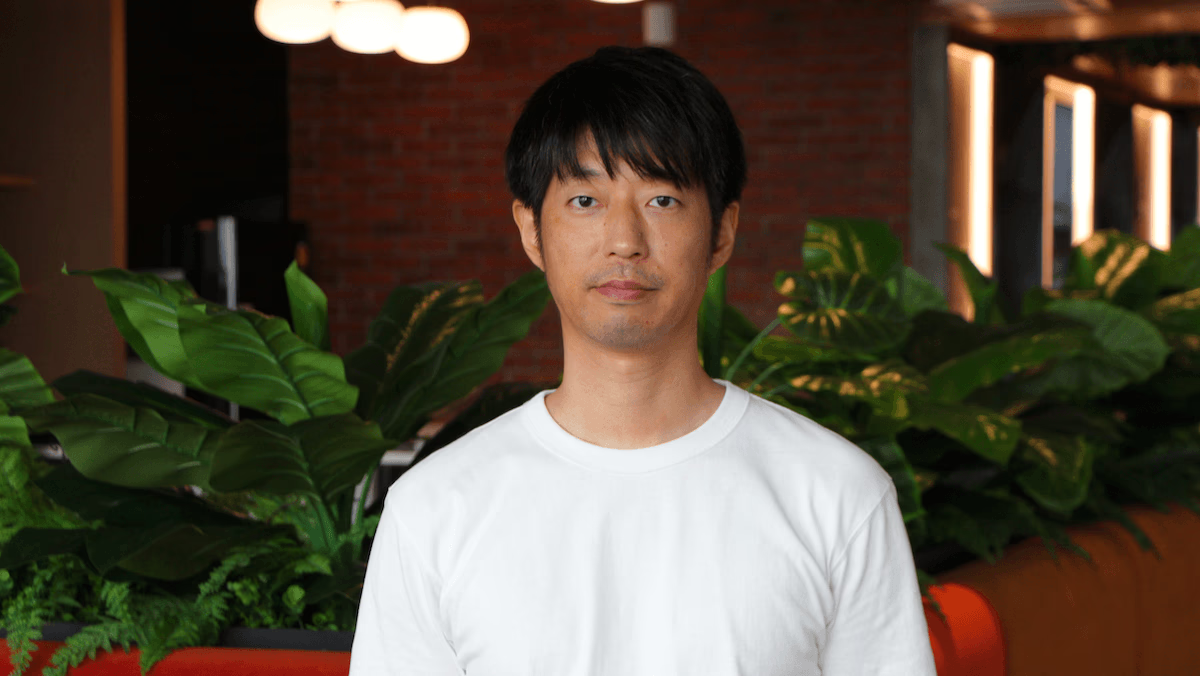
I'm Akamine, a director at Monosus Thailand. I've now been living in Thailand for two full years, and I've been reflecting on how my perspective has—and hasn't—changed since I came here.
Nearly two years into life in Thailand, and thanks to the generosity of my Thai colleagues, I'm able to work in a comfortable environment unlike anything I experienced in Japan. In this article, I'd like to share my "honest present": why our Thai office feels so comfortable, and what I think about day to day in my work—something that hasn't changed whether I'm in Japan or in Thailand.
Are Our Stereotypes About Thai People Actually Wrong?
When I worked in Japan, not a day went by without my seeing someone get angry, or be scolded, in front of others. As you all know, anger is contagious—and it's even more troublesome when you're the one involved. In our Thai office, however, you rarely see anyone angry or being scolded. That's certainly not because nobody makes mistakes at work. Recently, I've begun to think it's because the approach to anger management and problem-solving here is different from Japan. I believe the commonly heard stereotype that Thai people shirk responsibility is, in truth, a misunderstanding.
In Japan, when something goes wrong, there's a relatively strong tendency to track down the person who caused it. In Thailand, "who caused it" doesn't seem to matter much; the emphasis is instead on everyone talking together about why it happened and sharing the problem. Even when an issue arises, it's treated as everyone's problem, and in shared discussions people naturally speak about it as their own—"this is how it was for me," "this is what happened on my end." The person at fault may well know they were responsible, but I imagine it puts them at ease to realize they're not the only one, and that everyone faces similar problems.
When a problem occurs, identifying its cause and taking countermeasures is of course necessary, but the approach isn't dependent on individuals—nor does it pin things on them. Naturally, then, it never develops into blaming someone.
One more thing: when people from different countries, with different languages and values, work together, there's an underlying assumption that you can't possibly understand each other completely from the start—and I think that very assumption leads people to try to understand one another. Without the uniquely Japanese premise and expectation of "reading the air" or intuiting how others feel, you have no choice but to meet each other halfway. Japanese society, with its distinction between omote and ura—the face we show and what lies beneath—may be structured in a way that easily breeds contradictions and misunderstandings. Personally, I believe this Thai way of meeting halfway is what makes the workplace so comfortable.
Staying Close to People Who Are Passionate
It was when I joined Monosus that I first entered the so-called world of the Web.
Every company I'd worked for before was in a different industry. (Food service → Manufacturing → IT ← I am here)
Looking back, I always believed that work began with passion—wanting to become something, wanting to try something, wanting to be a specialist in something—and that I then had to become that "something."
Otherwise, I thought, I'd never be recognized as a full-fledged working adult.
But no matter how much time passed, I never found my "something." Perhaps each time I leapt into a new industry, I held a faint hope that this time, I might finally find it.
Yet throughout my work at every company, one thing never changed: the question "How can I be of help to people who are passionate about something?" It's hard to put into words, but I think that's what makes my work rewarding.
For example, one of my favorite TV shows is Ame-Talk!
In one of its segments, comedians who are crazy about something talk all-out about why they love it and what makes it so great. I love watching people who adore something so much that they talk about it with such gusto.
I also love watching sports programs and the Olympics—I could spend forever watching people who are serious about their sport giving it their all.
In other words, what I'm trying to say is this: my greatest joy is being close to people who have something they want to do, and helping them do it.
Many of you may already know it, but there's an article that clearly puts this feeling into words: "Dreamers" and "Enablers."
"Dreamers" (Yume-gumi) … people who have the capacity to become absorbed in something and have things they want to do
• Keywords: emotion, impulse, action
"Enablers" (Kanae-gumi) … people who may not have anything they particularly want to do themselves, but who can show the methods and priorities to those who have the desire but don't know how to go about it
• Keywords: structure, observation, understanding
I am exactly what the article calls an "Enabler."
On rare occasions, there are people who combine elements of both, but if it comes down to what they naturally enjoy, I suspect most people fall into one category or the other.
The article talks about mixing "people who have things they want to do" with "people who don't," and I believe this balance is extremely important. Especially in workplaces where Dreamers inevitably make up a large share (workplaces with engineers being one example), I feel a certain number of Enablers is essential.
There may also be people whose jobs require them to play both roles at once. Even so, if you know which type you are, you can identify the people and support you need—and perhaps work much more easily.
Once you know which one you are, I'm sure things will get easier. So, which one are you?

An Unchanging Habit: Analysis
For some reason, wherever I worked, I often ended up in analytical roles.
Even when I joined a company in a different position, before I knew it I was analyzing people and things to gauge their suitability—demand forecasting, interviewing candidates, and so on. For me, though, it may be less a job than a habit of analysis that comes naturally in everyday life. Of course, analyzing numbers is difficult without hands-on work experience, but I think I've had a habit of analyzing people for a long time.
To manage tasks, I sort through a lot of information, categorize it, and work out solutions for each category—a kind of solo brainstorming session I hold several times a day. Then I work through them in order of priority.
As for understanding people's aptitudes, it depends on how closely I've worked with them, but I observe their reactions, words, and actions, and build up a mental stock of things like the processes and timing of speaking that suit them, what they can and cannot tolerate, and what they're good and bad at—gradually establishing a common language with each person. This is true not only for the staff I work with but for clients as well. So with repeat clients, because we already share a common language, I can quickly understand what they're trying to say. With people I only work with for a short time, on the other hand, it's hard to get a grasp on them right away, so I feel my way forward—"Maybe it's like this?"—and sometimes get it wrong.
As I mentioned in my previous article, I never stop exploring language, so I find it fascinating that even among Japanese people, everyone's "common language" is different. But I also end up analyzing even the smallest gestures and sense of distance, and I pick up on interpersonal dynamics very keenly, so at times like that I deliberately try not to overthink things and stay optimistic. By the way, I'm really good at Werewolf, a game that tests your powers of observation (lol).
And So, the Days of Analysis Continue
And now, by a twist of fate, I've once again found myself in a role dealing with the suitability of people and projects. Which projects suit whom? Which teams work best together? What's causing this problem, what category does it fall into, and how should it be solved? Since solutions also require Web knowledge, I'm supported by the Dreamers around me, who teach me along the way.
My next challenge is figuring out how to build relationships in which we can talk positively and constructively. Since this involves other people, the real question is how I myself should change.
It starts with gathering information to understand the other person and the background of the issue, then doing my usual analysis, and finally deciding what actions to take and what to say. Perhaps it will begin with looking back on the path I've taken for any clues, and exploring means and methods I've yet to discover.
It looks like my days of analysis will continue.